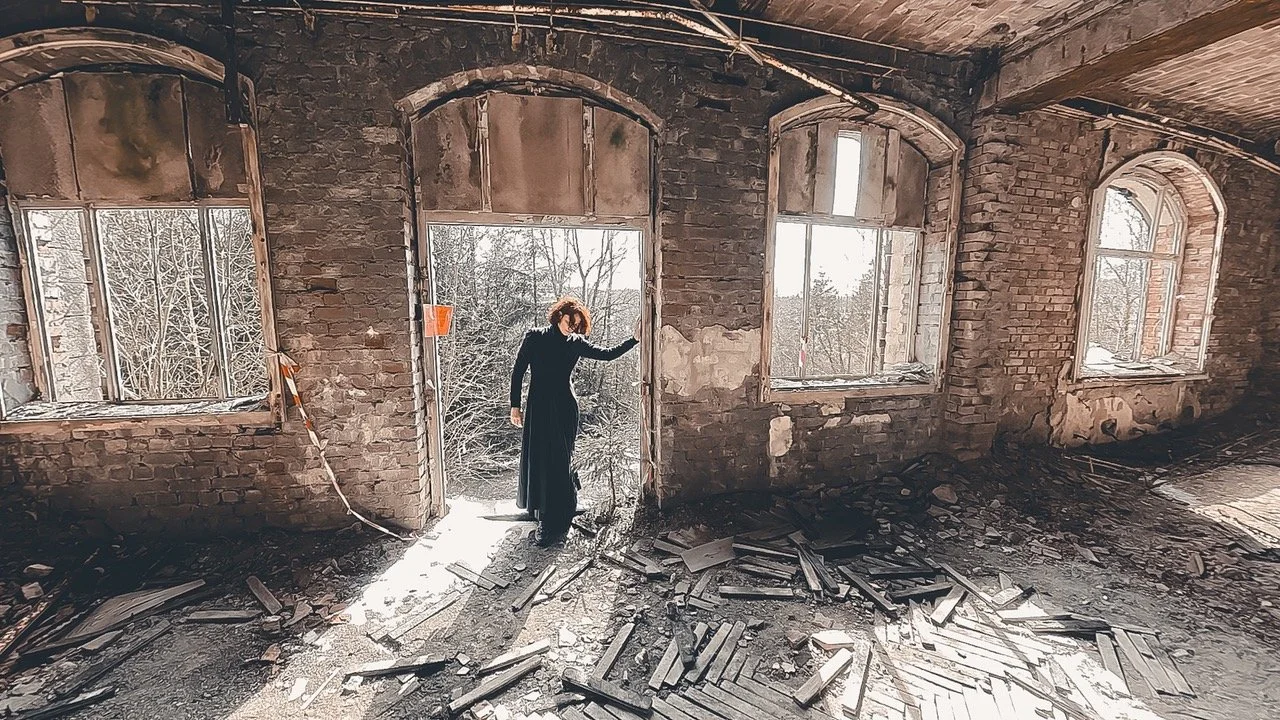
VISITING IMMUNE PLACES: THE SPECTRES OF TUBERCULOSIS AND THE BODY IN THE POST-SANATORIUM SPACE
The performance-as-research examines, through performance art, medical history, and spatial politics, how tuberculosis (TB) shapes bodies, public space, and collective memory. Although TB remains the world’s deadliest infectious disease, those affected by it are often rendered invisible by clinical isolation, while many historical sites once aimed at curing the disease are decaying. Drawing on concepts of spectrality and hauntology (Derrida, 1994; Gordon, 2007), the project uses ‘visitation’ as a method to inquire how medical histories persist materially, affectively, and politically in remote public spaces. By visiting 15 historically emblematic sanatoriums across Central Europe, the project explores how the spectres of tuberculosis emerge through bodies, matters or narratives. Conceived as 'immune places' (Brehmer, 1859), sanatoriums enforced isolation through architectural landscapes and ideology. Today, they remain marked by histories of biomedical authority and class inequality. A collective of performance artists approaches these sites situated between neglect, redevelopment, civic claims, and subculture to develop artistic practices that reveal and relate to the spectres these sites hold.